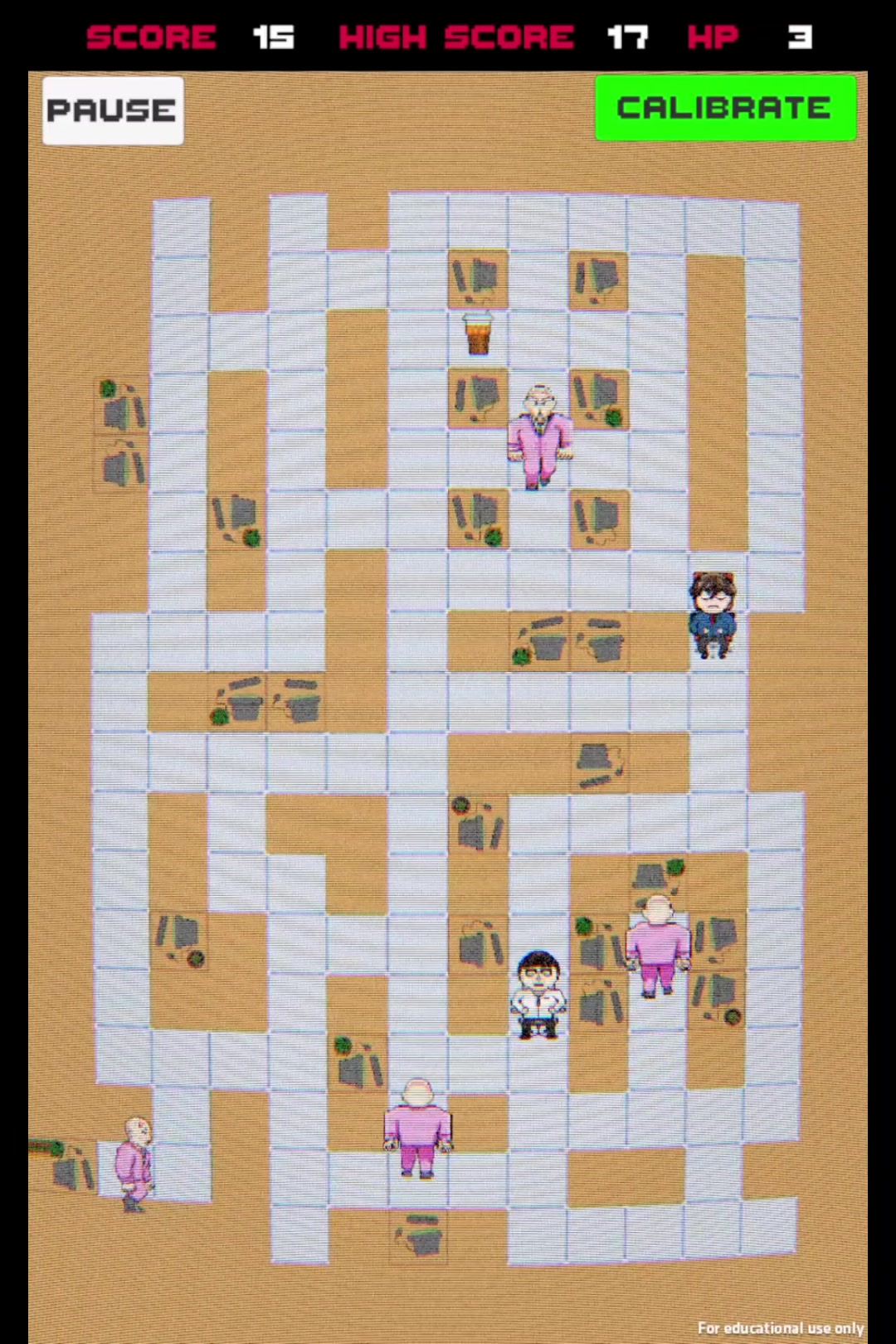
01 · Game loop
Deliver coffee, score points, avoid the bosses.
I was one of two engineers on this Unity mobile game. Coffee is both the delivery objective and a limited defensive resource.
- CollectPick up coffee
- NavigateAvoid the bossesChoose a route through the office
- DeliverReach a coworkerEarn points
Implementation details
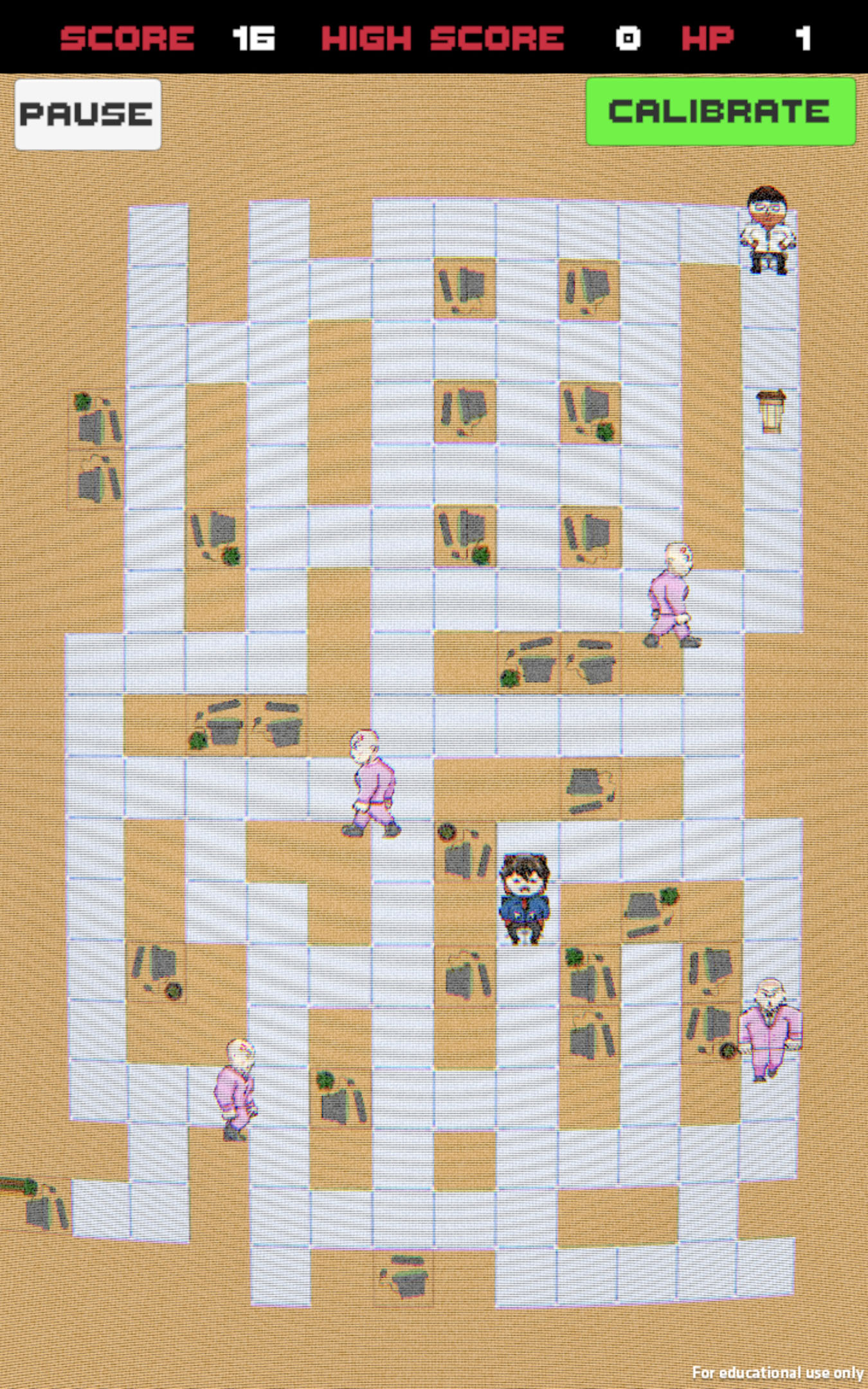
I was one of two engineers on this team project, credited alongside Dallin Frank. CoffeeTime combines mobile control, enemy interactions, and a compact delivery loop in Unity.
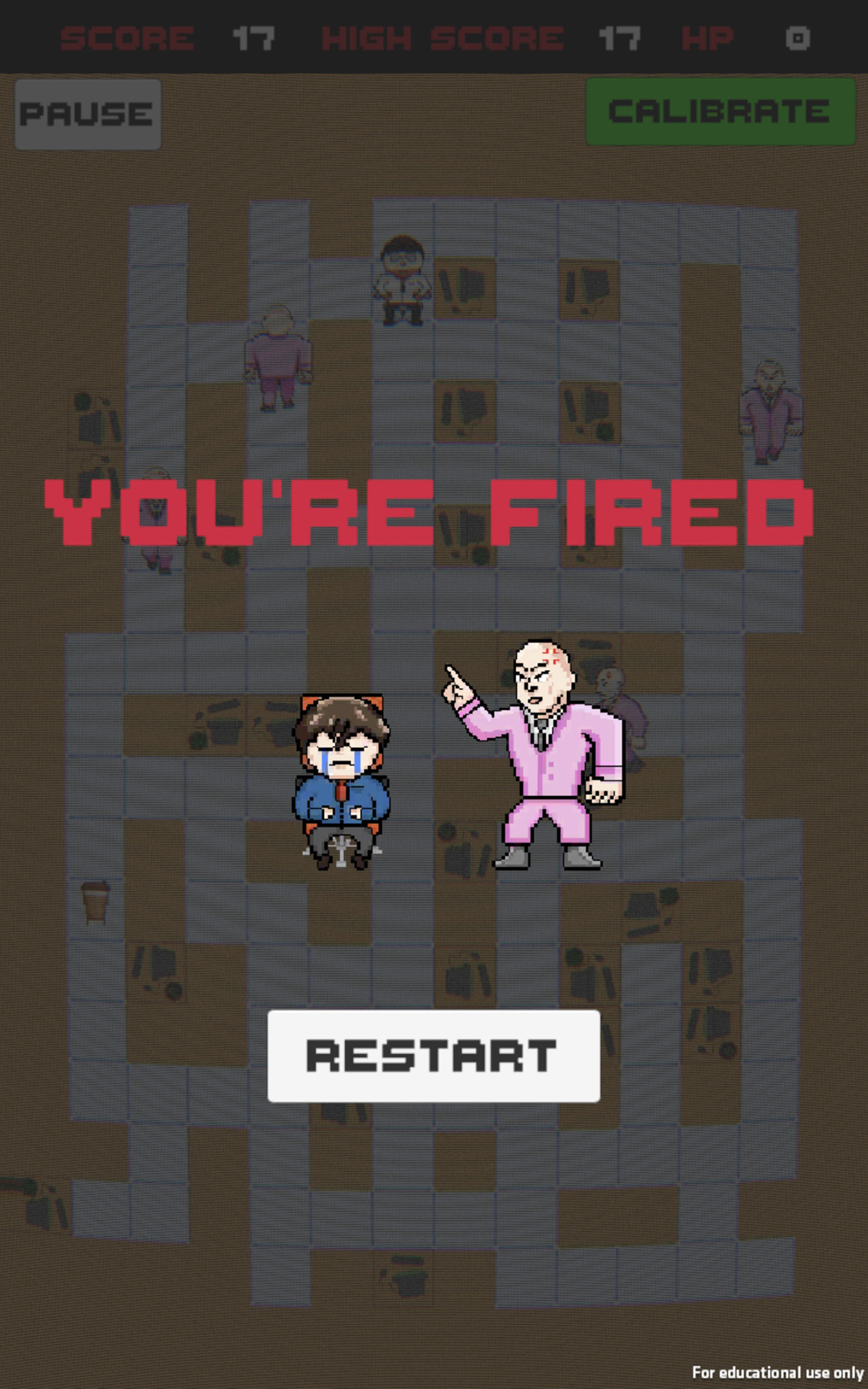
CoffeeTime reframes a retro maze-game structure around an office. The player collects and delivers coffee to coworkers while evading bosses who can end the run.
The compact premise keeps the rules immediately readable while leaving room for score routing, risk management, and input mechanics designed specifically for mobile play.
02 · Touch interaction
One interaction path supports both desktop testing and mobile play.
A shared pointer path supports touch play and mouse-based testing. A successful tap trades carried coffee for a brief enemy stall.
Implementation details
Unity's input system identifies the active pointer, converts screen coordinates into world space, and performs a 2D overlap check. Tapping an enemy while carrying coffee consumes the item and briefly stalls the threat.
- Pointer abstraction keeps mouse-based iteration available
- World-space overlap makes tap targets part of gameplay logic
- Coffee doubles as an objective and a limited defensive resource
03 · Motion control
Physical device tilt becomes an arcade control surface.
Calibrated motion input turns device tilt into a tunable movement vector.
Implementation details
Gyroscope, attitude, and gravity sensors feed a calibrated movement vector. The system maps real-world device rotation into responsive movement and applies axis-specific scaling so the feel can be tuned without changing the core controller.